periASTY recently laid the groundwork for developing and testing solutions that will help communities beyond cities to reduce emissions. Project partners collected ideas developed with local residents and organisations, brought together their needs, and drafted initial plans for cleaner transport, energy and industry in peri-urban areas.
The results are presented in the project’s first technical deliverable, D1.1 “The periASTY LLs their solutions and prototypical BIGMs and KPIS – the inception report”, a work led by CARTIF, together with Eindhoven University of Technology, University College Dublin, National Technical University of Athens, and the European Passengers’ Federation. This represents an important milestone for periASTY, as partners outlined how the solutions developed within the project will be organised, funded and evaluated across the nine Living Labs.
A shared starting point
The deliverable connects the project’s early research with the practical work needed to put the periASTY solutions in mobility, energy, industry, and governance. To do so, partners reviewed existing approaches and local conditions, designed solutions with local participants in workshops, and defined methods for measuring results. The report gives partners a shared understanding of local needs, how the proposed solutions should work, who should be involved and how progress will be measured. This helps ensure that development and testing respond to the needs of the communities involved.
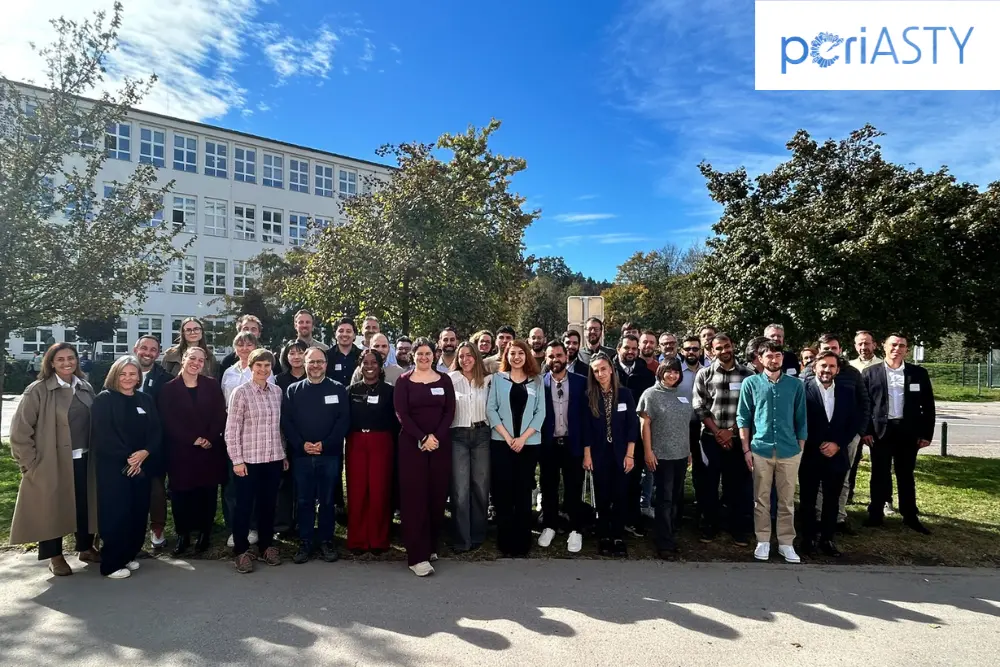
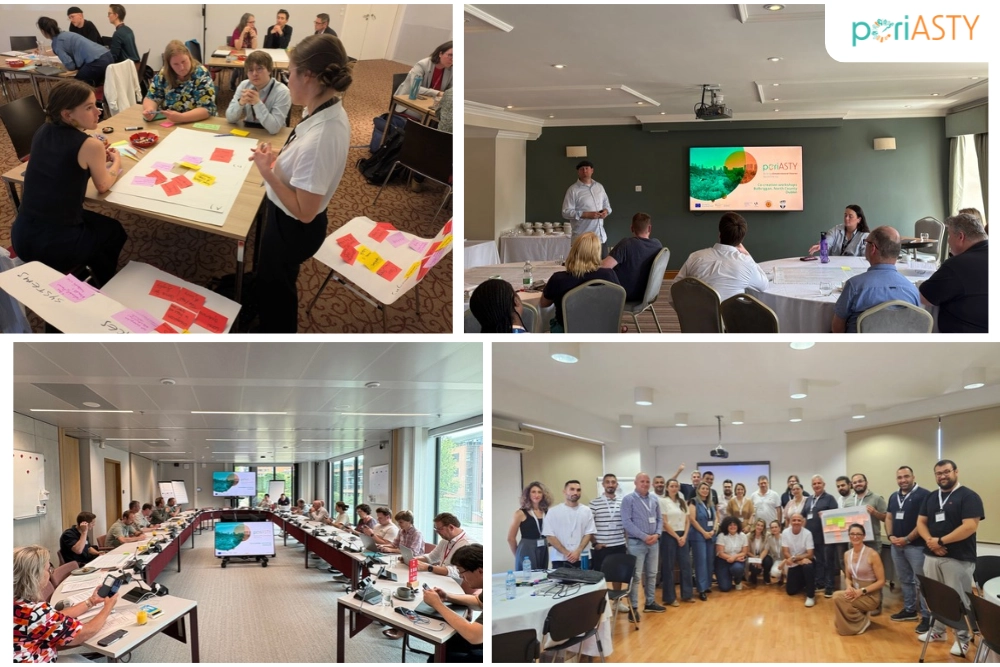
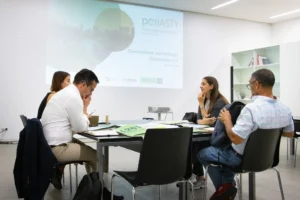
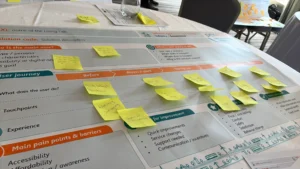
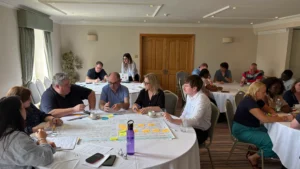
To better understand people’s experiences and willingness to use the project’s solutions, co-design workshops were organised with local participants in the periASTY Living Labs. Between 8 and 30 June 2026, eight in-person workshops were held across the participating areas, bringing together a total of 160 participants, including local authorities, transport and service providers, businesses, citizens, community representatives and researchers. A separate, phased engagement approach was established for Sisslerfeld, the ninth Living Lab. During the workshops, participants discussed local challenges and needs, shared their experiences and ideas, and provided feedback on the proposed solutions for mobility, energy, industry and governance. They also explored how these solutions could work in practice, who would benefit from them, what barriers might arise, and which organisations, resources and actions would be needed to put them into practice.
Overall, the deliverable highlights three main takeaways:
- Solutions must respond to local needs and work together. Transport services, energy infrastructure and recycling facilities are unevenly distributed, which means that improving one service in isolation may not be enough. Shared bicycles, for example, need safe routes and reliable connections to public transport to become a practical alternative to driving.
- Technology alone does not guarantee success. Putting together solutions into practice also requires funding, permissions, cooperation between organisations and clear responsibility for operating and maintaining services. Affordability, accessibility and ease of use are equally important, and digital services should not exclude people who lack suitable devices or confidence using them.
- Further work is needed before benefits can be demonstrated. Some of the project’s proposals still require additional discussion, technical development or agreements, while gaps in information limit comparisons between areas. However, partners now have a clearer, shared starting point for implementation and evaluation.
The initial designs will help technical teams understand what their tools and services need to do, which users they should serve and which local challenges they must address. Local teams will use the report to prepare demonstrations, clarify responsibilities and cooperation arrangements, and collect the information needed to assess results. In addition, the deliverable provides a starting point for assessing the project’s overall results, developing recommendations and helping other communities adapt relevant approaches to their own circumstances.
What’s next?
periASTY partners will now focus on turning the initial designs into practical solutions, testing them and using the results to make improvements. The initial designs for the project solutions will be developed further through technical work and continued discussions with local residents, businesses, service providers and public authorities. A second round of local workshops will be organised in early 2027 to revisit earlier assumptions and clarify aspects that could not be fully defined during the first round.
Ahead of testing in real-life settings, partners will adapt the tools and services for the Living Labs and address outstanding practical issues, such as permissions, funding, cooperation agreements and responsibility for operating and maintaining the solutions. The agreed measurements and questionnaires will then be used to assess changes from the initial solutions, understand people’s experiences and identify barriers to using them. Finally, the Living Labs will exchange experiences, including difficulties encountered and changes made, to understand which approaches could work in different contexts and what local adaptations would be needed.
Want to keep up with periASTY’s progress? Follow periASTY on LinkedIn and subscribe to our newsletter using the form at the bottom of the page.